mercredi 9 juin 2010

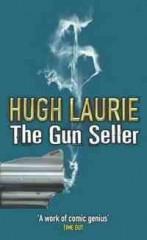
The Gun Seller


The Gun Seller, or how dear now world-wide famous Hugh Laurie has come out his manuscript. Thanks to the success of his American adventure House MD, we have become acquainted with another face of Hugh Laurie. He is an actor, a humorist and now a writer. More exactly he is so from 1996, but it is hard to get so widely published in France when you are almost unknown. Celebrity definitely helps. I must admit I started this book frankly biased as I have been already fond of this man for many years. But now that I have finished my reading I can say that I liked it even if some points are debatable. 

To put it in a nutshell, Thomas Lang, a former military man and humble citizen of the crown, is at first engulfed in a story of arm dealers he does not fully understand. Then he will only act for the care of the girl he is attracted to, Sarah Woolf whose father tried to hire Thomas. And in the end, Thomas will bluff readers in his actions. Actually, Thomas has been hired to kill Alexander Woolf. Being a good man and not an assassin, he tries to find this Mr Woolf to warn him against his enemies. And from that point on will begin his adventures. All in all, he will have to deal with the American CIA, the British Department of Defense, a terrorist group and one or two influential arm dealers. 

It is a good start but it could have been better. Easy to say, isn't it? I think that some passages are somewhat muddled. I must admit that I was quite confused and lost a few times. In some cases it is on purpose, that is for sure, and this confusion is equivalent to cinema plots when we have to wait until the end to fully understand the true part of characters. The author had many good ideas but not as well handled in the story has he could have done. He leaves sometimes the reader puzzled with his protagonist and what the latter is doing. Even though not telling much may be a good device, here this way of building his intrigue is not satisfactory enough. Apart from the plot, The Gun Seller proves to be original in Hugh Laurie's writing style. With Laurie's roles in our mind, we cannot but see his character in his writing style : witty, ironic and cynical. Everything we like nowadays. It is pleasant to read if you do not attach too much importance to details.

samedi 5 juin 2010

Sex and the City 2


Il est des gens qui regardent les six saisons de Sex and the City toute l'année pour terminer sur le film, d'autres qui regardent le premier film juste avant le second ou d'autres encore qui se passent de révisions. Voilà quelques lignes récapitulatives si une petite remise à niveau s'impose! Sex and the City version cinéma nous offre une suite, attendue, aux aventures de nos quatre new-yorkaises préférées. Carrie est toujours avec Big qui roucoule et prépare les noces avant une légère catastrophe sentimentale. Miranda quant à elle habite toujours Brooklyn et subira des déconvenues conjugales alors que pour Charlotte tout n'est que bonheur. Enfin, Samantha oscille entre amies et amant via la liaison aérienne Los Angeles-New York. En somme il a des chagrins, des rires, des « honey moon » vacances entre filles et du bonheur, le tout aux couleurs de la mode et un peu du sexe – eh oui, nos quatre célibataires ne le sont plus vraiment
Pour lire une critique plus en détail, c'est par là.

Il est souvent dit que quand on aime passionnément une chose, notre vision et notre avis sera forcément biaisé, subjectif. Il m'est d'avis que dans certaines occasions, c'est parce qu'on aime passionnément que l'on est à même de critiquer plus justement. Pour le second film issu de la série, on prend les même et on recommence! Cette fois-ci les filles font leurs crises de la quarantaine et cinquantaine. Carrie ne voit pas le mariage de la même façon que son mari et s'interroge sur son métier d'écrivain. Charlotte est finalement surpassée par son rôle de mère. Miranda a des problèmes d'avocate parmi des avocats et Samantha lutte massivement contre les affres de la ménopause avec une quarantaine de pilules à ingérer par jour!
Carrie. A pour signe distinctif d'aimer la mode. Dans cet opus elle nous livre ses dernières créations : un appartement ultra chic-design-et-je-ne-sais-quoi et son dernier livre, le mariage en sujet.  Où est passée la fille qui rangeait des pulls dans son four? On ne retrouve ici qu'une obsessionnelle de la déco qui, excusez moi du peu, marche sur un parquet ultra clean avec des talons.  Et d'ailleurs, qui porte des talons aiguilles chez soi, hein?! Cherchez l'erreur. L'appartement est sympa mais il respire le luxe. Et le luxe, je commence à en avoir ras la casquette. Rolex, Gucci, Dior et j'en passe, c'est bien beau mais qu'elle est l'image pour le spectateur? Ça banalise les marques de luxe et passe pour les rendre accessible alors que non. Ça encourage le culte du luxe et je ne suis pas d'accord. Ce n'est peut être juste qu'un film mais ce serait une erreur de croire qu'il ne peut en rien affecter la vision des choses du spectateur. Je le vois chaque jour malheureusement. Bref, passons, on en est pas moins émerveillés quand on aime la mode. Au bout de deux ans de mariage, Carrie a le mal des sorties alors que Big préfèrerait rester tranquillement sur le canapé, centre apriori universel de la vie marital routinière.
Charlotte. Est maman de deux petites filles, dont une passe ses journées à pleurer. Harry, quasi inexistant. Elle compte sans arrêt sur la nounou sexy et sans soutien-gorge (détail qui est non sans importance) pour décompresser. Où est passé la Charlotte qui ne rêvait que d'être maman? On voit ici une bourgeoise surmenée qui ne peut vivre sans une aide à domicile. La belle a besoin de changer d'air.
Miranda. Celle là n'a pas énormément de problèmes, excepté un patron qui ne la supporte pas. Elle va juste se trouver du temps pour sa famille et des vacances.
Samantha. Pré-ménopausée, la quinquagénaire de la bande lutte pour paraître jeune en avalant des hormones à tort et à travers. C'est par une apparition de son grand amour Smith Jerod qu'elle va se voir offrir, à elle et ses 3 amies, un séjour de rêve et luxueux à outrance à Abu Dhabi. Attention à la tentation. Imaginez nos quatre américaines, et surtout Samantha, dans un pays où les femmes se doivent d'être discrète et où les rapports hommes-femmes sont interdits en public. Attention les dégâts. Pour couronner le tout, passez au souk et croisez ce bon vieux Aidan quand Carrie manque de nouveauté. Attention les cœurs.
On l'oublierait presque à la fin mais le film commence par des noces, et pas n'importe lesquelles : celles, également attendues, de notre "homo" préféré Stanford. Il se marie, et en blanc qui plus est! Tout est grandiose, tout est blanc, tout est gay, jusqu'au numéro orchestré par Liza Minelli, et on adore ça!  Ensuite vient le temps des fameuses vacances placées sous le signe de la détente et de la démesure. Se succèderont visites, farniente, et surviendront sans aucune surprise les déboires inhérents à un séjour dans un pays où la culture est si différente (cf Bridget Jones ou peut être même Bangkok aller simple) : choc des cultures, choc des caractères et j'en passe.

Le deuxième opus cinématographique de Sex and the City ne peut en aucun cas être un fiasco. Quand on aime la série on ne peut que se réjouir de voir encore un peu nos personnages favoris. Finalement c'est court six saisons, on en veut toujours plus. Elles nous manquent au final. J'ai remarqué une chose néanmoins : quelques aspects de la série manquent à l'appel. Chaque épisode était l'occasion de découvrir un autre article de Carrie, d'autres interrogations sur sa vie et ceux qui l'entourent. Il y a, ici, moins d'introspection, moins de formules chics, chocs et funs. Heureusement il nous reste l'humour de ces filles et leur vision de la vie américaine qu'on adore et qui nous fait rêver. Rêvons encore et toujours mes soeurs...

mercredi 2 juin 2010

Jack the Ripper


This is Jack the Ripper
Jack the Ripper
Sent through time
To come to kill you

I often have in mind these parts of the song Jack the Ripper by The Servant. And I told myself “Why not.” There is Jack the Ripper the band, the song, the books, the films and now exclusively for AnglophoniZ, there will be Jack the Ripper the article. Let's take a look at this period of English History.

London 1888, District of Whitechapel. A series of murders is the talk of the town. You are a girl at night in the East End London and you are afraid of walking alone. Your only thought is for the name on everyone's lips “Jack the Ripper.” What do you think of it as a beginning ?
“The Whitechapel Murderer,” “Leather Apron” or “Jack the Ripper” pointed at the same one person but only the last name remained in our minds. This nickname has kept all his mystery with the years and the folklore of this gruesome story has not diminished because, actually, no one has been arrested, no one knows the end of the story or even what really happened. That's the distinctive feature of this case and what makes it popular. There were so many attacks at this period that we do not know exactly how many were committed by the Ripper. However historians, policemen and pseudo detectives agree on the number of 5 victims coined the “canonical five.” There were Mary Ann “Polly” Nicholls in Buck's Row, Annie “Dark Annie” Chapman at 29 Hanbury Street, Elizabeth “Long Liz” Stride in Berner Street and Catherine Eddowes in Mitre Square and finally Mary Jane “Black Mary” Kelly at 13 Miller's Court. The five of them died between August 31st and November 9th 1888 in a square of 400 meters in the middle of this “den of immorality.” The five of them were prostitutes and not very young, except one. The mutilations increased as the murders followed on. The modus operandi of the Ripper then included deep throat slashes, genital-area and abdominal mutilation, facial mutilations and even removal of internal organs.
As for the investigation itself, you could have said that it was a bloody mess! The newly appointed head of the Criminal Investigation Department (CID) Robert Anderson went to Switzerland very quickly when appointed to only return to England near the end of the attacks. Sir Charles Warren, the Metropolitan Police Commissioner was thus at the head of the investigation he has lead with a bad hand. For example, he ordered an important inscription to be washed away because he feared the citizens' reaction. But they have nonetheless reacted as promptly, a group of volunteer citizens, the Whitechapel Vigilance Committee, was formed because of their dissatisfaction with the police efficiency. Moreover, many letters aimed at helping the police were sent and examined whether they were useful or not.
Media also played an important part in these events. As I said before, attacks or murders were quite common but thanks to an arousal of media, Jack the Ripper became extremely famous. Actually his nickname was introduced to people thanks to the press. The murderer was supposed to have sent letters to the people in charge with this affair. Three letters have become well known and were called the “Dear Boss” letter in which he signed “Jack the Ripper” for the first time, the “Saucy Jack” postcard and the “From Hell” letter which came with a box containing half of a kidney. However, it was later claimed that these letters were sent by a journalist avid of publicity. As you see, there is another mystery concerning this case that will not be solved.

What if the media had not make a fuss out of these murders? Maybe our vivid imagination would not have so flourished and created so many works out of these events. What if the police has been more organise and efficient? Maybe the Ripper would have been caught. We will never know. There was – and still is - so many hypotheses, so many contradictions, so many miscarriage of justice and so many suspects that you could imagine almost what you wish. Even Queen Victoria take an interest in these events and fiercely asked her ministers to take care of it. All in all, the murders enable citizens and authority to be aware of the sanitary situation in the East End and in the decades following the murders the worst places were demolished. Now you may go to London and visit the murders sites. You too, be an expert in “ripperology” and make your own investigation.

mardi 25 mai 2010

Quand les dieux buvaient

Catherine Dufour a laissé courir son imagination fertile pour pondre une mini série fantasy fantaisiste : Quand les dieux buvaient. Pour un peu compliquer le tout, la série compte 4 tomes. Au départ publiés en 4 livres différents, le livre de poche les a sortis en 2 à savoir :

- Blanche Neige et les lance-missiles qui comprend le tome 1, Blanche Neige et les lance-missiles et le tome 2, L'ivresse des providers


- Blanche Neige contre Merlin l'Enchanteur qui comprend le tome 3, Merlin l'ange chanteur et le tome 0 (oui oui), L'immortalité moins six minutes


A dire vrai, je me rend compte que pour le deuxième livre Blanche Neige est...inexistante. Passons, c'est plus "cohérent" et plus vendeur. parce que oui, au cas où je ne l'avais pas encore assez répété, moi et les Disney ne faisons qu'un. Je les adore. Alors quand je vois un livre qui a pour titre Blanche Neige et les lance-missiles, moi je prends !

Comme vous pouvez l'imaginer, ce livre est bourré de références aux contes, légendes et autres personnages mystiques. Mais pas seulement. C'est aussi un pur labyrinthe temporel. Je m'explique. Tome 1, nous voilà du temps où la Terre est plate, le personnel employé du Paradis des alcooliques à l'image de leur patron et c'est franchement le bazar. Tome 2, la Terre est ronde tout va bien, années 2000 et le grand méchant du 1 file des migraines au patron d'une multinationale façon Microsoft. On se balade dans les ordinateurs avec des fées et des ectoplasmes : ça change et c'est marrant. Tome 3, alors là ça se complique un peu puisque nous suivons un angelot et un archange (Merlin...) à travers des millénaires. Ces deux là vont s'aimer et se faire la guerre jusqu'à ce que les hommes habitent dans l'espace (rien que ça). Et le tome suivant, tome 0. Pour compliquer un rien la sauce, nous suivons les fées du tome 2 dans une quête façon Seigneur des Anneaux pour aboutir à la naissance des hommes. Pour être encore plus claire sur le tome 0, ce n'est pas vraiment "façon Seigneur des Anneaux" c'est plutôt : revivez le film à travers deux fées qui suivent les 4 hobbits. N'en déplaise, c'est quand même drôle.


Je suis presque sûre de vous avoir embrouillés.

Oublions le tome 0 pour le moment. Revenons au premier. Blanche Neige est tyran, et elle s'allie à un mec du purgatoire qui a une dent contre les dieux et veut mettre le tout à sa sauce. Ca, c'est pour les méchants. Du côté des gentils, nous suivrons Aurore des bois qui s'est réveillé, le chaperon rouge rebaptisée Vareuse-Tagueule, Peau d'âne et c'est Cendrillon qui attend que son Merlin de petit copain vienne la réveiller. Il y a quand même quelque chose que je n'ai pas compris avec ce merlin (cf tome 3). J'ai dû passer à côté de quelque chose dans ma lecture. Bref.
La suite, quelque fées ont survécus des millénaires planquées dans des arbres et l'une d'entre elles apparaît à une humaine qui l'aidera avec des fantômes surfant sur le Net à vaincre une nouvelle fois le méchant du tome 1 (encore lui!).
Tome 3, focus sur un angelot et un archange, archange qui se fera appelé Merlin et un peu Dracula aussi Nyarknyarknyark Tome très historique, on sent les recherches. Ca diffère énormément du premier livre ce qui fait que j'ai eu du mal à bien rentrer dedans. Ca vous donne un avant goût. J'aimerai bien en raconter plus mais je crois qu'alors la lecture en sera moins divertissante pour vous.
Et enfin, L'immortalité moins six minutes. Dès le début de la "quête" des fées on ne peut s'empêcher de littéralement voir le film de Peter Jackson. Elle s'en moque un peu, mais c'est parce qu'elle en est fan et ça se voit. C'est une bonne idée même si ça peut paraître "facile" comme intrigue (pourquoi s'embêter à créer des histoires si c'est pour reprendre un film me direz vous).


Bon eh bien il ne me reste plus qu'à espérer vous avoir donné envie de plonger dans les aventures diverses et variées d' Aurore des bois, Merlin, Pétrol'Kiwi, l'angelot ou encore la fille du Père Noël ! Parce que moi, j'ai été plus qu'enthousiasmé par ces histoires qui s'entremêlent avec brio.

samedi 22 mai 2010

Pride and Prejudice


Maybe the most popular of the six novels, Pride and Prejudice appears at first hand as a very complex story involving “too many characters” and even “being boring”, depending on opinions. It is absolutely NOT the case! The plot must be considered into the context of the 19th century. It was initially entitled First Impressions. However after the publisher's rejection, Austen revised her manuscript to build up Pride and Prejudice as we know it today.

The novel is mainly about two sisters, Jane and Elizabeth Bennet and how they manage to reach happiness in life and love. One day, the Bennets' routine is agitated when they hear the news that the wealthy Charles Bingley - and Co.- moves in a neighbouring place, Netherfield Park. Mrs Bennet sees automatically an opportunity to marry one of her five daughters. Marriage and social expectations were rather an important subject matter in the 19th century society, and especially to Mrs Bennet because of the entail. This was a law stating that land and money must go to a male heir. In other words, the five Bennet daughters would have nothing if their father died prematurely. When they all meet at a small ball, Charles and Jane are directly attracted to each other whereas the temporary tensions between Darcy - Bingley's closest friend - and Elizabeth begin. These tensions began when he rejected her when Bingley suggested him to dance with her. But you will see that the feelings of either Darcy and Elizabeth will change a lot as the story develops. Later, a man called Mr Collins, who is Mr Bennet's cousin and heir, visits the family and purposely wants to marry one of the five girls. He chooses Elizabeth, who refuses him. Out of pique he decides to marry Elizabeth's friend, Charlotte Lucas. From now on will begin states of frustration, love, deceptions and socially improper behaviours from which I leave details aside in order not to spoil your future reading of the book. Nevertheless it is interesting to note that in Jane Austen's novels, “all is well that ends well” as Shakespeare would have said.

Obviously both Darcy and Elizabeth express pride and prejudice throughout the novel, just as many characters do. Darcy is proud of his social class and is prejudiced against the Bennets' conduct. Elizabeth's pride is attacked when Darcy refuses to consider her at the first ball because of her social origins and she is prejudiced against his reserved and arrogant manners that she frankly dislikes. Her prejudice against him is even more amplified when she hears about his conflict with George Wickham, a militia officer encountered in their small village. But it is mostly their first impressions that matter (and remember how the novel was entitled firstly), impressions that will be revised while all the characters will know each other better.
To me the novel does not make a case for moral values, what you should think or not, what you should do or not. The most important feature is the way characters manage to fulfil their inmost desires. Pride and Prejudice is also a great description of the period, full of realism. One of Jane Austen's particularities was to examine what surrounded her, and thus we can find a certain verisimilitude in her novels. In addition to that, we can notice several instances of irony in the characters, in their behaviour but also in some dialogues conducted by Mr Bennet or Elizabeth for example. Hence the fact that dialogues are very important and reveal a lot about characterization. Speeches enable the reader to learn more about characters and it is a way for the reader to form his own opinion upon the situation, the characters' mind and their behaviour. We can see that this emphasis is shown right from the incipit as the novel begins with a dialogue. Moreover, Jane Austen often read her works to a restricted audience, hence the importance of the orality of her text.

This story, though deeply rooted in a specific period of History, keeps on captivating many readers throughout the centuries. Besides, if you want to see an adaptation, I eagerly recommend that you see the one made by the BBC in 1995, which remains the one and only faithful adaptation to the novel. [Colin Firth will always be my Mr Darcy!]